How to Unclog a Drain: 7 Methods That Actually Work
The best way to unclog a drain depends on the severity. For minor clogs, try boiling water or a baking soda and vinegar mixture. For stubborn clogs, use a drain snake or call a professional for hydro jetting. Here are seven methods ranked from easiest to most effective.
Why Drains Clog
Most drain clogs build up over time. Kitchen drains clog from grease, food particles, and soap buildup. Bathroom drains clog from hair, soap scum, and toothpaste. The clog usually forms in the P-trap (the U-shaped pipe under the sink) or in the drainpipe within the first few feet of the fixture.
Slow drains are early warnings. If water takes more than a few seconds to drain, you’ve got buildup forming. Address it now before it becomes a full blockage.
Method 1: Boiling Water
Best for: Minor kitchen drain slowdowns caused by grease or soap.
Boil a full kettle of water and pour it directly down the drain in two or three stages, waiting a few seconds between pours. The heat melts grease and dissolves soap buildup.
Important: Only use this on metal pipes. If you have PVC drain pipes (white plastic), use hot tap water instead — boiling water can loosen PVC joints.
Method 2: Baking Soda + Vinegar
Best for: Bathroom drains with soap scum and mild organic buildup.
Pour 1/2 cup of baking soda down the drain, followed by 1/2 cup of white vinegar. Cover the drain with a wet cloth to keep the fizzing action directed downward. Wait 30 minutes, then flush with hot water.
This works because the chemical reaction creates carbon dioxide gas that helps break up soft blockages. It won’t cut through heavy grease or solid obstructions, but it’s a good first attempt.
Method 3: Plunger
Best for: Full blockages in sinks, tubs, and showers.
Use a cup plunger (flat bottom), not a flange plunger (that’s for toilets). Fill the sink with enough water to cover the plunger cup. Block the overflow hole with a wet rag. Plunge vigorously 15–20 times.
The plunger creates pressure that pushes and pulls at the clog, breaking it loose. This is surprisingly effective for clogs in the P-trap.
Method 4: Remove and Clean the P-Trap
Best for: Visible clogs in sink drains.
Place a bucket under the P-trap. Unscrew the slip nuts by hand (or with pliers). Remove the P-trap, dump the contents into the bucket, and clean out any gunk with a bottle brush. Reassemble and test.
If the clog isn’t in the P-trap, it’s deeper in the drainpipe — move on to a drain snake.
Method 5: Drain Snake (Manual Auger)
Best for: Stubborn clogs deeper than the P-trap.
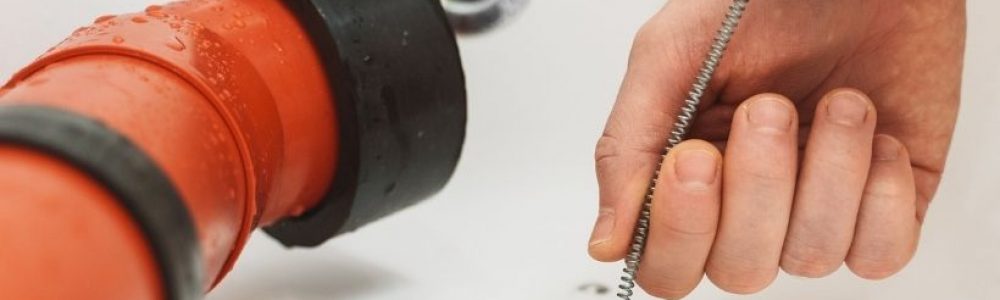
A manual drain snake is a flexible metal cable with a corkscrew tip. Feed it into the drain until you hit resistance, then turn the handle clockwise to bore into the clog. Push and pull a few times to break it up, then slowly retract the snake. Run hot water for a few minutes to flush debris.
A 25-foot drain snake ($15–$30 at hardware stores) handles most residential clogs. For mainline clogs, you need a powered auger or professional equipment.
Method 6: Enzyme Drain Cleaner
Best for: Maintenance and slow drains (not full blockages).
Enzyme-based drain cleaners (like Bio-Clean or Green Gobbler) use bacteria to eat organic matter. Pour the recommended amount down the drain before bed, let it work overnight, and flush in the morning.
These are slow-acting but safe for all pipe types and
septic systems. Use them monthly as preventive maintenance.
Skip chemical drain cleaners (Drano, Liquid-Plumr). They contain sodium hydroxide or sulfuric acid that can corrode pipes, damage septic systems, and create dangerous fumes. They also don’t work well on most real clogs.
Method 7: Professional Hydro Jetting
Best for: Recurring clogs, mainline blockages, and tree root intrusion.
Hydro jetting uses a high-pressure water stream (3,000–8,000 PSI) to blast through clogs and scour the inside of pipes clean. It removes grease, scale, tree roots, and years of buildup. A
plumber inserts a specialized nozzle into a cleanout and works through the entire line.
Professional hydro jetting typically costs $300–$600 depending on the access point and severity. It’s the most thorough solution and prevents clogs from recurring for months or years.
When DIY Won’t Work
Call a plumber when:
- Multiple drains are clogging at the same time (mainline problem)
- You smell sewage coming from drains
- Water backs up in one fixture when you use another
- The clog keeps coming back within weeks
- You have a septic system and suspect a full tank or drain field issue
How to Prevent Future Clogs
- Use drain screens on all drains to catch hair and debris
- Never pour grease down the kitchen sink — let it cool and throw it in the trash
- Run hot water after every use to flush soap and residue
- Clean pop-up stoppers in bathroom sinks monthly
- Use enzyme cleaner monthly as preventive maintenance
Drain Cleaning in Winchester, VA
Recurring clogs or a slow mainline drain? Powell’s Plumbing & Air offers professional
drain cleaning and hydro jetting throughout Winchester and the Shenandoah Valley. We’ll camera-inspect the line first so you know exactly what’s going on before any work starts. Call
(540) 313-9199 or
schedule service online.