Why is my furnace making a loud banging noise?
A loud bang when your gas furnace starts is often delayed ignition: gas builds up before it lights, then lights all at…
Furnace won't turn on, won't ignite, or keeps running after the house is warm? A trained technician tests the whole system, explains what failed and gives you a written price before any work starts.
Available in: Winchester & Wilmington, and Norfolk from January 2027
Heating and cooling service from our Norfolk branch starts January 1, 2027. Until then, our Norfolk team is here for plumbing, drains, boilers, gas lines, septic and wells. Call the Norfolk office with any questions.
Most furnace problems start small: a click with no flame, a blower that never stops, a filter that's choking the airflow.
Furnace repair usually comes down to one part: an igniter or flame sensor on a gas furnace, a pressure switch, a limit switch, the blower motor or the thermostat. A furnace that runs all day without reaching temperature, or one whose bills suddenly jump, is telling you something.
Your technician checks every component, not just the one that failed, then explains the repair and gives you a written, flat-rate price. HVAC repairs sometimes need a part ordered. If so, we tell you when it'll arrive and book the return visit before we leave.
Every repair is done to code and to the manufacturer's specifications by trained, licensed HVAC technicians, backed by a 30-day labor warranty plus the manufacturer's parts warranty.
 No heat at allIgniter, sensor or thermostat
 Clicks but won't igniteIgniter or flame sensor
 Keeps running after the temperature is reachedThermostat or blower relay
 Short cycling on and offOften airflow or a limit switch
 Heating bill jumpedLosing efficiency
 Smell gasLeave the house first →
A few quick checks can get the heat back on, or tell your technician exactly where to start.
We were not going to leave the customer without heat overnight.
Brandon, HVAC apprentice, Winchester
Make sure it's set to Heat, a few degrees above room temperature, with fresh batteries if it uses them.
A clogged filter can make the furnace overheat and shut itself off. Swap it if it's gray.
Furnaces have a light-style switch nearby. Make sure it's on, and that the breaker hasn't tripped.
Tell us what it's doing: clicking, humming, blowing cold air or nothing at all.
Swipe through the repairs behind most no-heat calls.
Clicks, glows or tries to light, but the burners never catch.
Lights for a few seconds, then shuts off. Often a clean or a new sensor.
The inducer runs, but the furnace won't go further.
Overheating and shutting off, often caused by poor airflow.
Heat at the furnace, but weak or no air at the vents.

The least expensive fix there is, and the cause of more calls than you'd think.
Wrong settings, dead batteries or a failed control.
Thermostats →The same steps on every visit, so you always know what's next.
Online or by phone. We tell you the diagnostic fee before we book.
A confirmation, a reminder, then an “on the way” notice.
Your technician introduces themselves. Uniform, ID badge, marked truck, shoe covers.
Not just the part that failed. Then your options, in plain English.
A written, flat-rate price, signed before work starts.
If a part has to be ordered, we tell you when and book the return. Photos come with your invoice.
No surprise bill. You approve a written price first.
We repair before we sell new equipment. When a furnace is old and the repairs keep adding up, we'll show you the numbers side by side.
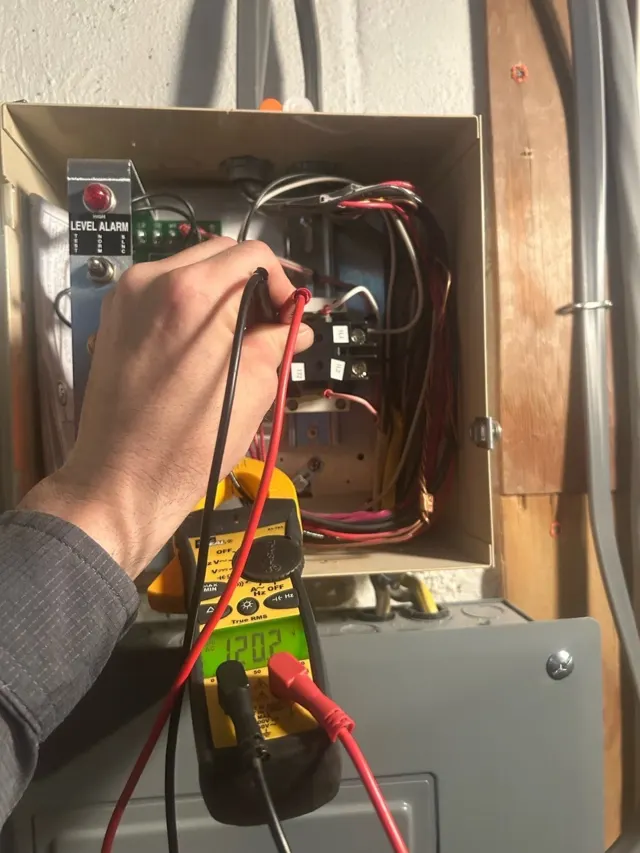
Igniters, sensors, switches, blower motors and controls are repaired on the spot, or as soon as the part arrives.
We won't push a new furnace when a repair will do.
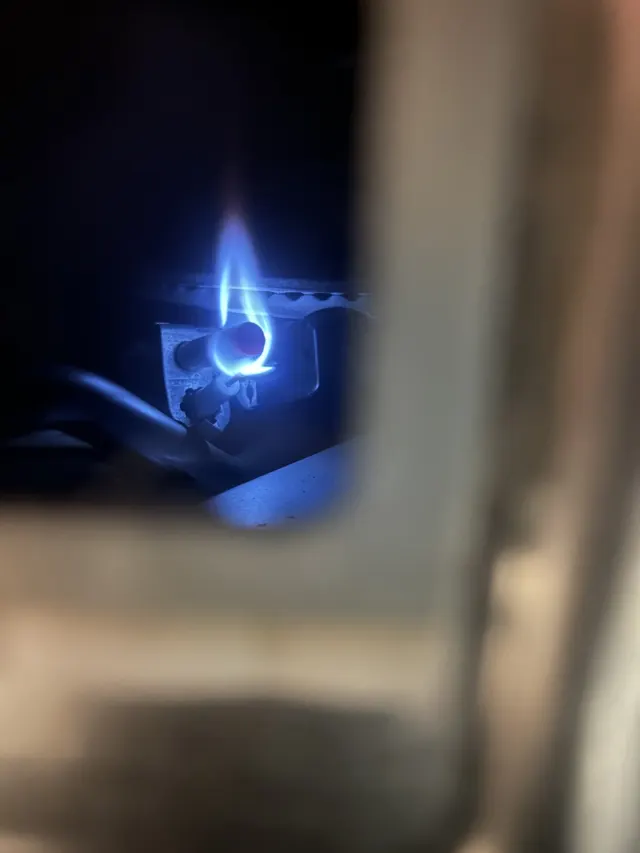
If the repair costs a large share of a new furnace, or the heat exchanger has failed, replacing makes more sense.
In-home estimates on furnace replacement are free.
Your furnace's owner's manual calls for regular professional maintenance. Here's what that does for you, and the one job you can do yourself.
Burners, igniter and flame sensor are cleaned and tested, the parts behind most no-heat calls.
Heat exchanger, venting and safety switches are inspected, so small problems are caught early and the furnace lasts longer.
Change it every one to three months. It's the least expensive thing you can do for your furnace.
Blue Duck Club members get two seasonal tune-ups a year, one in spring for cooling and one in fall for heating, covering up to two systems, plus priority scheduling and 5% off services.
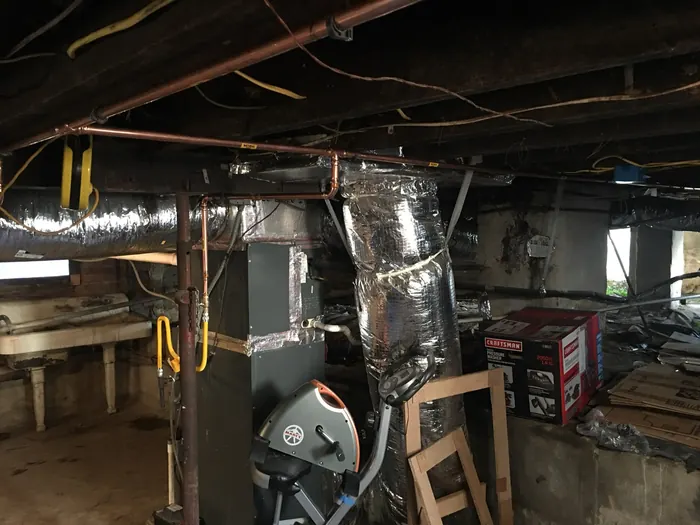
A family had no heat right before a major ice storm. We worked with the team to gather the parts and had everything running before the storm came in.Erich, HVAC manager, Winchester
Google reviews mention our heating and cooling work.
93% of them are five-star.
Book online or call your local branch. You'll get a 2-hour arrival window and a written price before we start.
Cost, common problems and what to check first.
A dirty filter, by a long way. It chokes the airflow, makes the furnace overheat and shut itself off, and wears out parts. After that, failed igniters and dirty flame sensors on gas furnaces are the calls we see most.
Usually a failed igniter, a dirty flame sensor, a pressure switch that won't close, or no gas reaching the burner. Check the thermostat and the furnace switch first. If it clicks and tries but won't light, call us, and don't keep restarting it.
The thermostat may be set to fan On instead of Auto, or a relay or control board may be keeping the blower running. If the burners keep firing too, the thermostat itself may have failed.
Every repair is done to code and to the manufacturer's specifications by trained, licensed HVAC technicians. It's backed by a 30-day labor warranty, plus the manufacturer's warranty on any new parts.
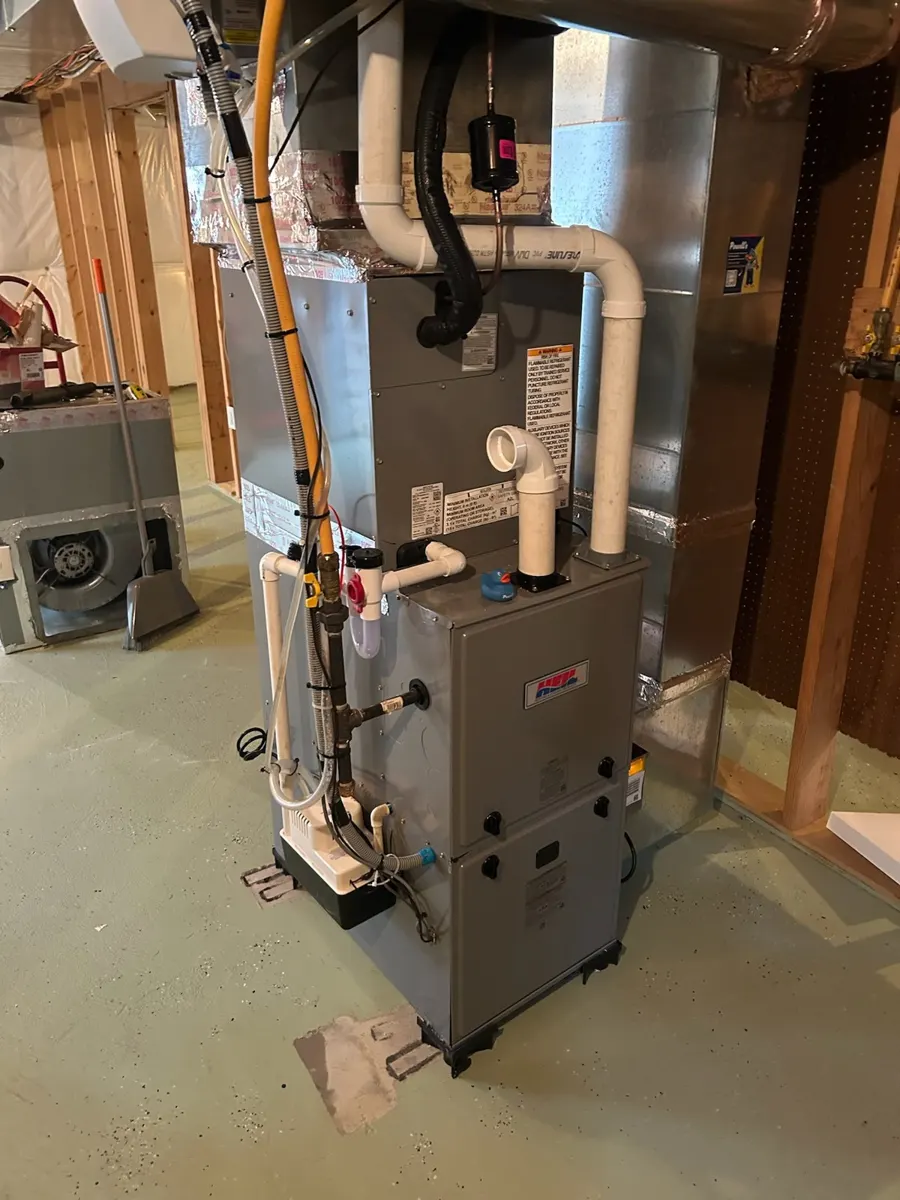
A loud bang when your gas furnace starts is often delayed ignition: gas builds up before it lights, then lights all at…
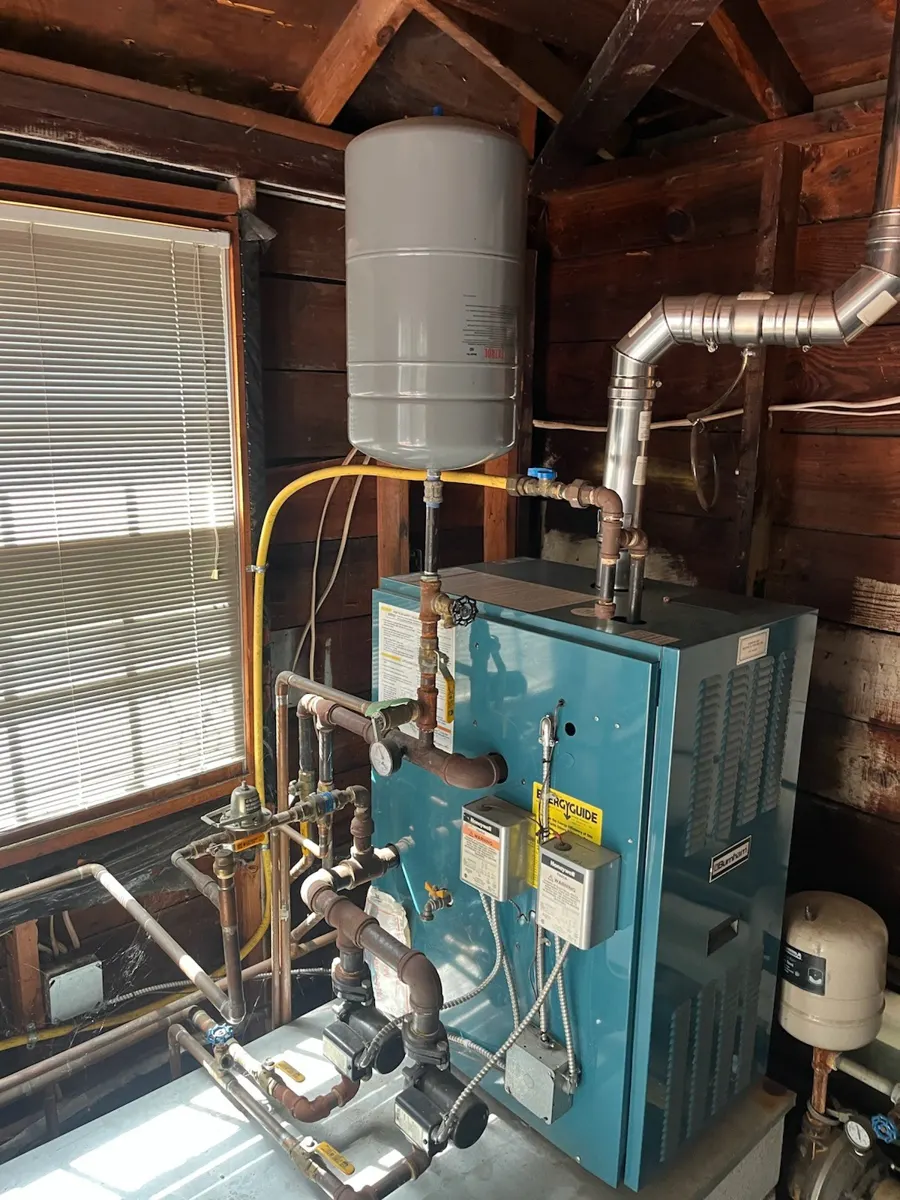
A water heater heats water for your faucets, showers and appliances. A boiler heats water (or makes steam) that circulates through radiators…
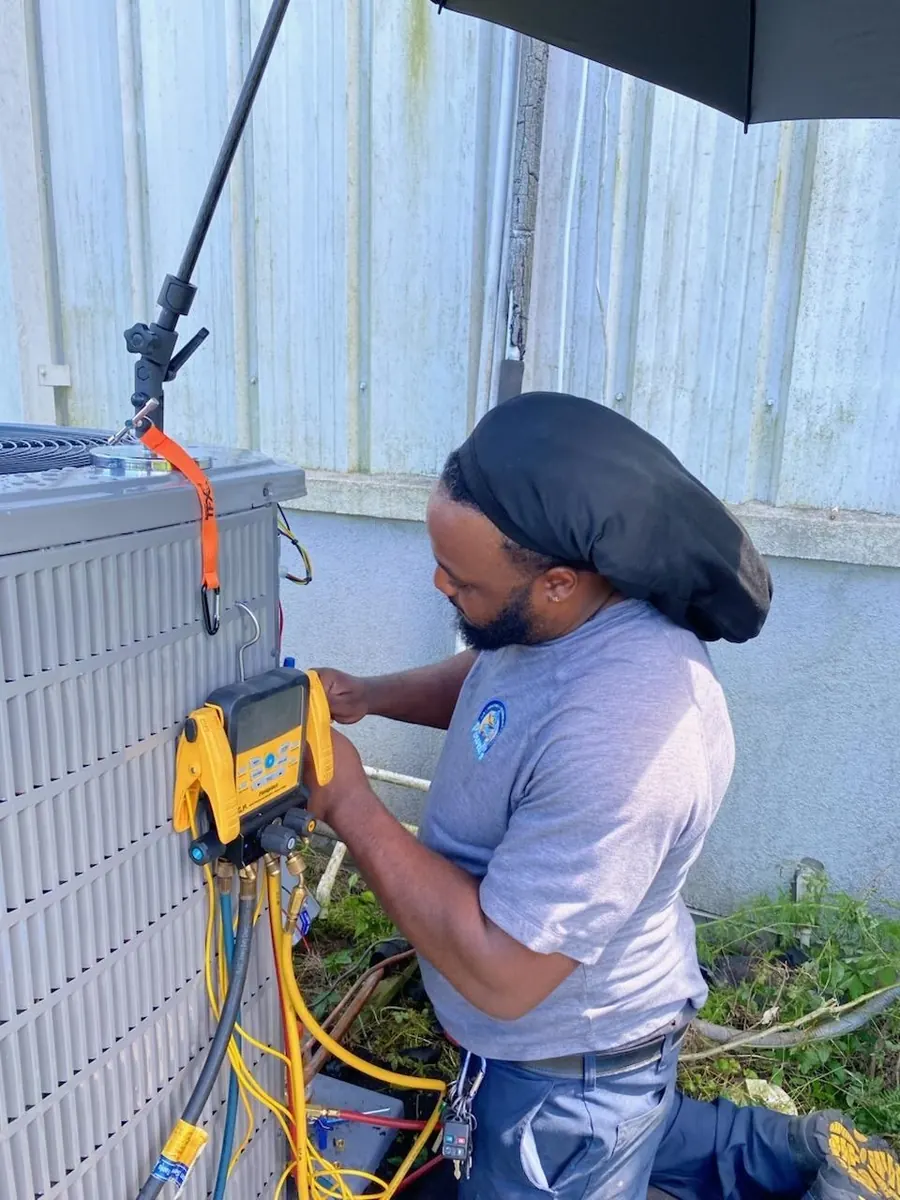
Your HVAC system moves heat. A furnace or boiler makes heat, an air conditioner or heat pump moves heat out of (or…