
Benefits of having a water softener system
A water softener removes the calcium and magnesium that make water hard. That means less scale on faucets and shower glass, longer…
Scale on the faucets, spots on the dishes and a water heater working too hard? A water softener fixes hard water at the source.
Available in: Norfolk, Winchester & Wilmington
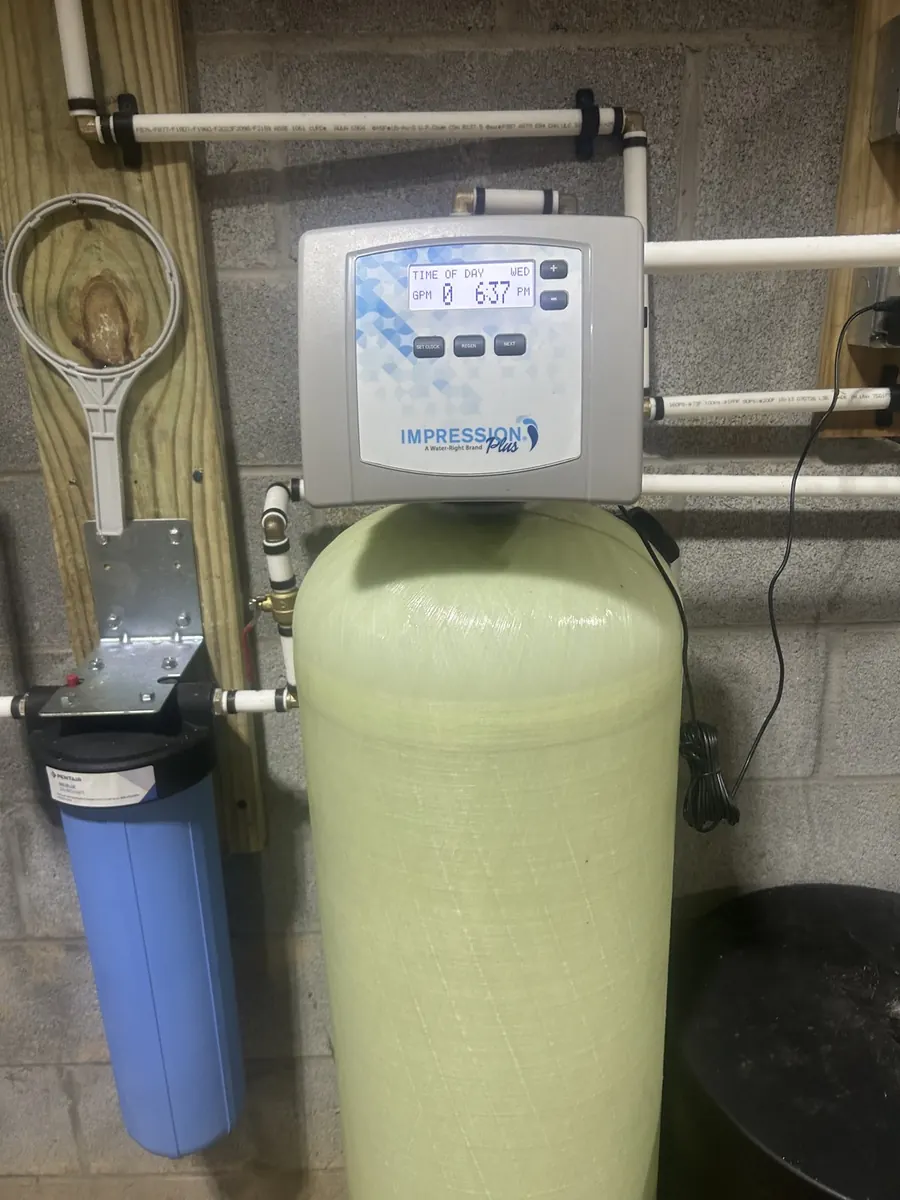

That's hard water, and it's doing the same thing inside your pipes and water heater.
Hard water carries minerals that build up as scale on fixtures, inside water heaters and in appliances. A water softener swaps those minerals out before the water reaches your taps, using a resin tank and a salt tank that recharges it.
We install and replace water softeners, repair ones that have stopped working, and set them up for your water and household size. Water softeners are one of the jobs our customers finance most.
 Scale on faucets and shower headsClassic hard water
 Spots on dishes and glassMinerals left behind
 Water heater working harderScale inside the tank
 Dry skin and dull hairSoap won't rinse clean
 Softener not workingRepair or replace
The same steps on every visit, so you always know what's next.
Online or by phone. We tell you the trip fee before we book.
A confirmation, a reminder, then an “on the way” notice.
Uniform, ID badge, marked truck, shoe covers and drop cloths.
Your plumber finds the cause and explains your options in plain English.
A written, flat-rate price, signed before work starts.
Photos of the finished work come with your invoice.
No surprise bill. You approve a written price first.
If a newer softener has stopped softening, it's often a setting or a part. Older ones are usually worth replacing.
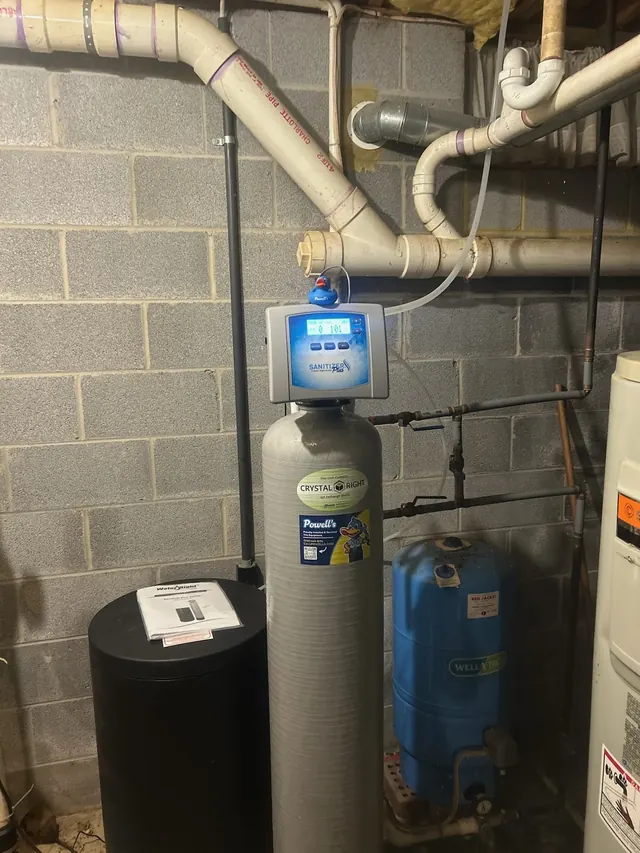
Salt bridges, control valve settings, bypass valves and resin problems are diagnosed and fixed.
We'll tell you if it's worth repairing.
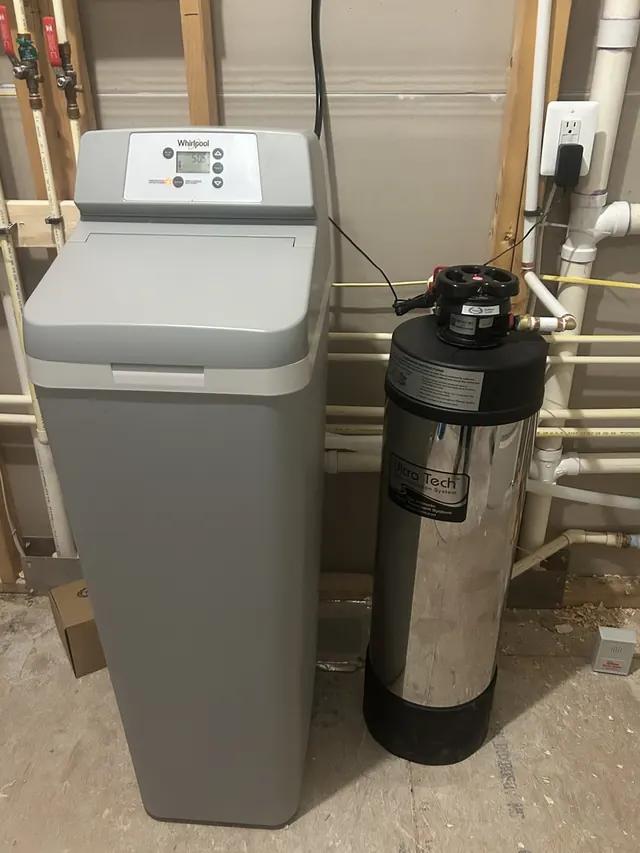
Sized for your water and household, with a bypass and drain connection.
Often paired with a whole-house filter.
Google reviews across our three local branches.
93% of them are five-star.
Book a free in-home estimate, or call your local branch.
Salt, filters and maintenance.
It depends on the size of the system, your water and whether you add a filter. In-home estimates are free, and you get a written price before any work starts. Financing is available on jobs of $500 or more.
A small amount of sodium is added as the minerals are removed, and the water doesn't taste salty. If you're watching sodium, a drinking water filter at the kitchen sink is a common add-on.
Maybe. A softener removes hardness minerals, not sediment, chlorine taste or odors. If you notice those, a filter handles them. Many homes use both.
Usually a sediment filter goes first to protect the softener, then the softener. Your plumber sets up the order that suits your water.
Keep the salt tank topped up, break up any salt crust, and have it checked if the water starts feeling hard again. Blue Duck Club members get 5% off softeners and filtration.
A water softener removes the calcium and magnesium that make water hard. That means less scale on faucets and shower glass, longer…
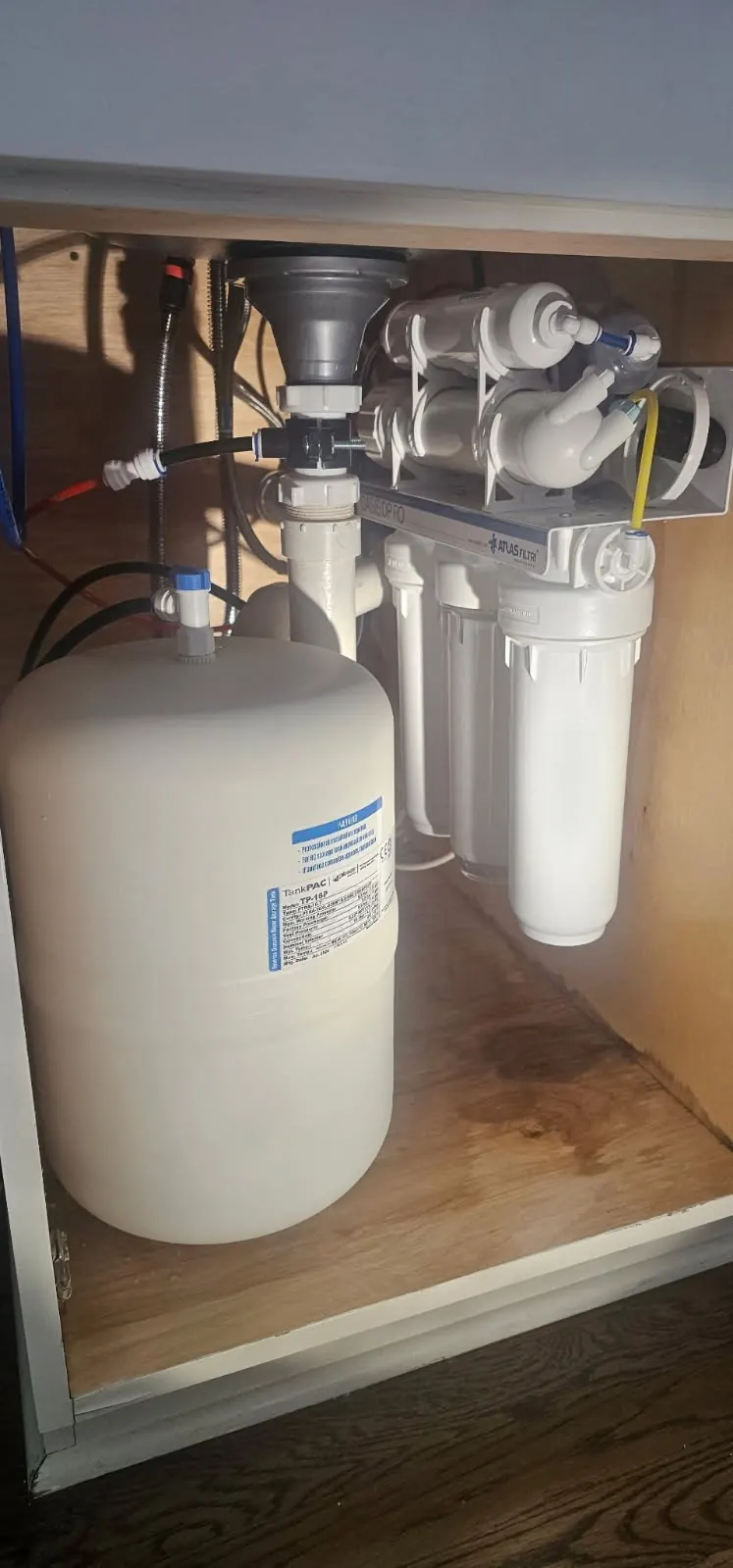
Reverse osmosis pushes water through a very fine membrane that removes most dissolved solids, lead, many chemicals and microbes. Deionization swaps out…
If only the hot water is discolored, the water heater is the likely cause. Brown, red or yellow water usually means rust…